Google Is Turning Search Into a Decision Tool. Is Your Website Ready?
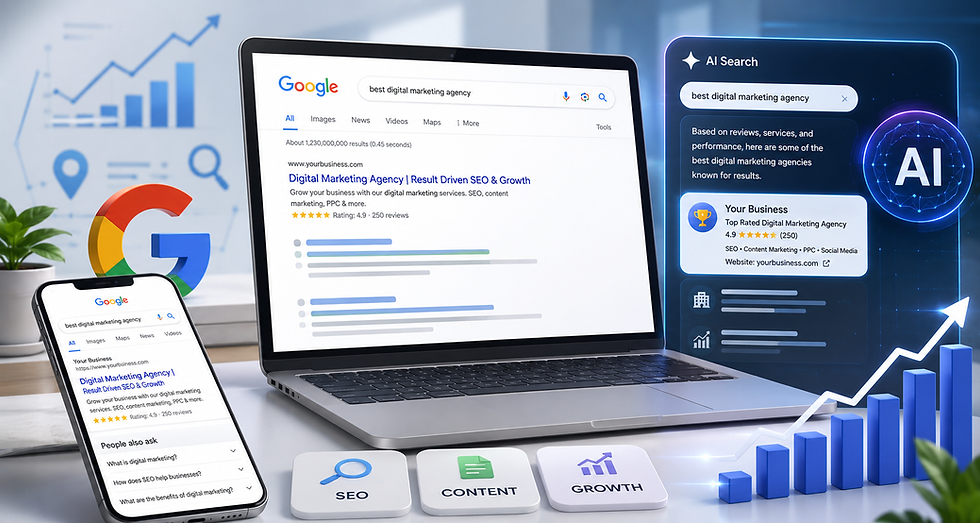
Google’s latest AI Search update is another sign that search is changing fast.
But this is not just another “AI is changing SEO” moment.
This update points to something bigger: Google Search is moving from helping people find answers to helping people make decisions and take action.
That matters for every business with a website. For years, SEO was mostly about getting found. Could you rank? Could you get clicks? Could you bring people to your site? Those things still matter. But now your website also needs to help search engines and AI tools understand whether your business is relevant, credible, and easy to choose. That is a different standard. And for a lot of businesses, the first place to look is not the blog. It is the service pages.
What Google Announced
At Google I/O 2026, Google announced several updates to Search, including a more AI-powered Search box, expanded AI Mode, Search agents, agentic booking, and custom tools created directly inside Search. Google described the new AI-powered Search box as its biggest upgrade in more than 25 years. Additionally, Google introduced Google AI Search, which leverages advanced artificial intelligence to enhance search capabilities and provide more relevant results to users.
A few details stand out.
Google said users will be able to ask more specific questions using text, images, files, videos, and Chrome tabs as inputs. It also said users can ask follow-up questions from AI Overviews and continue into a more conversational AI Mode experience.
Google also introduced Search agents that can monitor information across the web, including blogs, news, social posts, shopping, finance, and sports, then send synthesized updates based on a user’s specific question.
For local and service-based businesses, one of the biggest pieces is agentic booking. Google said Search will be able to help users find local experiences and services based on detailed criteria, compare pricing and availability, and connect users to booking options. In select categories like home repair, beauty, and pet care, Google also said users will be able to ask Google to call businesses on their behalf.
That is not just search as a list of links.
That is search becoming part research assistant, part comparison tool, and part decision engine.
Search Is Moving From “Find Me Information” to “Help Me Decide”
This is the part businesses need to pay attention to.
People are not only searching for basic information anymore.
They are asking more detailed questions, like:
Who is the best fit for what I need?
What should I do first?
Which provider matches my budget, location, and timing?
What are my options?
Who can I trust?
Can I book this now?
That changes how your website needs to work.
A vague homepage is not enough.
A thin service page is not enough.
A blog post that explains a broad topic but never connects it to your services is not enough.
Your website needs to help people and search systems understand what you do, who you help, and why your business is a good option. This is where SEO, AEO, content strategy, and conversion strategy start to overlap.
Your Service Pages Matter More Than Ever
A lot of businesses treat service pages like a quick summary. They write a few paragraphs, add a contact button, and move on. That may have worked when users were clicking through several websites and doing most of the comparison themselves. But if Google and AI tools are helping users compare options faster, your service pages need to be much clearer.
A strong service page should answer:
What exactly do you offer?
Who is this service for?
What problem does it solve?
What is included?
How does your process work?
What outcomes does it support?
What makes your approach different?
What should someone do next?
What questions do people usually ask before hiring you?
This is not just good user experience. It is good AI search preparation. If your content does not clearly explain your services, AI systems have less context to work with.
AEO Is Not Just FAQs and Schema
AEO, or Answer Engine Optimization, is often talked about like it is just a formatting exercise.
Add FAQs.
Add schema.
Use question-based headings.
Those things help. But AEO is bigger than that. AEO is about making your business easier to understand, evaluate, and trust. That means your website content should be clear enough that a person can skim it and understand the value. It should also be structured enough that search engines and AI tools can identify the main points. Good AEO answers questions directly, but it also supports decision-making.
For example, instead of only answering:
What is SEO?
A stronger business-focused page also answers:
How do I know if my website needs SEO help?
What should I fix before spending more on ads?
How does SEO connect to lead generation?
What should I expect from an SEO audit?
Those are the questions people ask when they are closer to making a decision.
That is where your content needs to show up.
Your Website Needs to Be Decision-Ready
If Google is becoming more action-oriented, your website needs to be ready for people who are already comparing options. That means every key page should make the next step obvious. For service businesses, that includes:
Clear service names
Specific descriptions
Simple calls to action
Updated contact information
Easy scheduling or inquiry forms
Proof of experience
Testimonials or case studies
FAQs
Location or service area details
Internal links to related services
Clear pricing guidance when appropriate
This does not mean every page needs to be long. It means every page needs to be useful. If someone lands on your site from Google, ChatGPT, Perplexity, an AI Overview, or a direct brand search, they should not have to work hard to figure out what you do.
Local and Service-Based Businesses Should Pay Attention
Google’s update matters especially for businesses that depend on appointments, consultations, estimates, bookings, or calls. If AI-powered Search can help people find local services, compare availability, and even contact certain businesses, your business information needs to be accurate everywhere.
That includes your:
Website
Google Business Profile
Service pages
Contact page
Booking links
Online listings
Reviews
Social profiles
Inconsistent information creates friction.
And friction is exactly what AI-powered search experiences are trying to reduce.
If your hours are wrong, your service descriptions are vague, or your booking process is confusing, you are making it harder for both people and search tools to choose you.
Content Still Matters, But It Has to Work Harder
This does not mean blogging is less important. It means blog content needs a clearer job. A blog should not just bring traffic. It should support the buyer’s journey. For example, instead of publishing another broad post like:
Why SEO Matters
A stronger post would be:
What to Fix on Your Website Before You Spend More on Google Ads
Or:
Why Your Service Pages Are Not Converting Organic Traffic
Or:
How to Know If Your Website Is Ready for AI Search
Those topics answer more specific questions.
They also connect more naturally to a service someone may need.
That is the kind of content that works better for SEO, AEO, and actual lead generation.
What to Fix First on Your Website
You do not need to overhaul your whole site at once.
Start with the pages that matter most.
1. Clarify your homepage
Your homepage should quickly explain:
What you do
Who you help
What problem you solve
What action someone should take next
Avoid vague lines like:
Marketing solutions for modern businesses
Say something clearer, like:
SEO, AI search, and content strategy for businesses that need better visibility and stronger leads
Specific beats clever.
2. Improve your top service pages
Pick your most important services and make those pages stronger.
Each page should include:
A clear intro
Who the service is for
What is included
How the process works
What outcomes it supports
Related FAQs
A clear CTA
This is one of the highest-value updates most businesses can make.
3. Add decision-stage FAQs
Do not only answer basic definition questions.
Add questions people ask when they are close to reaching out.
Examples:
How do I know if my website needs an SEO audit?
What should I fix before investing in AI search optimization?
How long does it take to improve organic visibility?
What is included in a content strategy?
Can SEO help if my website traffic is fine but leads are down?
These questions are more useful than generic FAQs because they reflect real buying concerns.
4. Strengthen trust signals
If someone is comparing you to another provider, trust matters.
Add:
Testimonials
Case studies
Client examples
Years of experience
Industry experience
Certifications
Media mentions
Clear author or business information
Search is becoming more decision-oriented, so credibility matters more.
5. Make your CTAs easier to follow
A visitor should always know what to do next.
That does not mean every button has to scream “Book Now.”
But each page should guide the reader toward a logical next step.
Examples:
Schedule a consultation
Request a website audit
Read a related case study
Explore SEO services
Contact us with questions
Do not make people hunt for the next step.
6. Connect blogs to services
Blog posts should not sit by themselves.
If you write about AI search, link to your AI search or SEO service page.
If you write about website content, link to your content strategy page.
If you write about conversion issues, link to your audit or consultation page.
Internal linking helps people move through your site. It also helps search engines understand how your content fits together.
What This Means for SEO
SEO is not going away.
But it is becoming less about isolated keywords and more about clear, connected information.
Your website needs to support:
Traditional Google rankings
AI Overviews
AI Mode
Conversational search
Local search
Comparison moments
Booking and inquiry actions
Branded discovery
Follow-up questions
That is why SEO and AEO should not be treated as separate projects. They should work together. SEO helps your content get found. AEO helps your content get understood. Conversion strategy helps your content turn interest into action. You need all three.
The Bottom Line
Google is not just changing how people search.
It is changing what people expect from search.
People want answers, but they also want help deciding what to do next.
That means your website needs to do more than show up.
It needs to be clear. It needs to be useful. It needs to build trust. And it needs to make the next step easy.
For businesses, this is the real takeaway from Google’s latest AI Search update:
Your website should not just be optimized for traffic. It should be optimized for decisions.
That starts with clearer service pages, stronger trust signals, better FAQs, and content that answers the questions people ask before they choose you.
AI search is moving fast.
But the best place to start is still simple:
Make your website easier to understand, easier to trust, and easier to act on.
Is your website ready for AI search?
Full Heart Marketing helps businesses improve SEO, strengthen service pages, and create content that is easier for both people and AI search tools to understand.
Schedule a consultation to see what your website should fix first.


Comments